
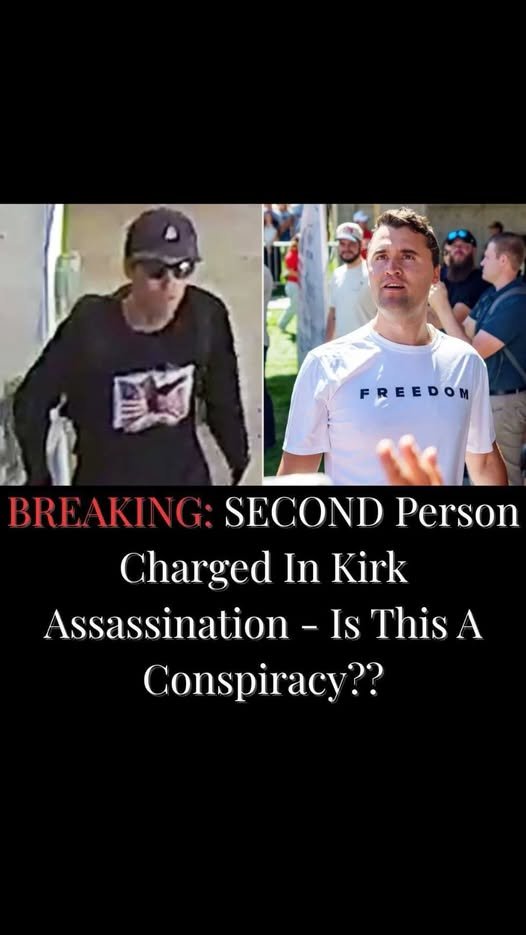
The country is still grappling with the shocking assassination of conservative activist Charlie Kirk, who was fatally shot during a speech at Utah Valley University. The attack, carried out from a rooftop overlooking the venue, has not only sparked outrage and grief but also ignited a heated debate about justice, politics, and truth in a divided nation.
Federal prosecutors have charged 22-year-old Tyler Robinson in connection with the shooting, citing evidence that includes surveillance footage, online messages, and tips reportedly provided by some of Robinson’s relatives. Yet, as the case moves forward, Robinson’s grandmother has publicly challenged the accusations, saying authorities may have the wrong person.
The FBI’s Case Against Robinson
According to officials, surveillance cameras captured a young man on the rooftop near the time of the shooting, where shell casings linked to the weapon were later found. Investigators also claim to have uncovered Discord chat logs in which Robinson allegedly expressed anger toward Kirk and suggested violent intentions.
Perhaps most surprising, law enforcement has revealed that relatives of Robinson contacted the FBI with concerns about his behavior leading up to the tragedy. While details remain sealed due to the ongoing case, investigators point to those tips as a crucial part of their decision to make an arrest.
A Grandmother’s Defense
Despite the evidence outlined by prosecutors, Robinson’s grandmother has voiced strong doubts about the charges. In emotional remarks, she described her grandson as a “shy, quiet kid” who preferred drawing and video games to political arguments or conflict.
“Tyler never owned a gun. He’s the kind of boy who avoided confrontation,” she said. “The person they are describing doesn’t sound like my grandson.”
Her defense highlights a painful tension often seen in high-profile cases: the divide between public perception of a suspect and the loyalty of loved ones who refuse to believe the worst.
A Divided Public Response
Kirk’s supporters, devastated by his loss, see the case as a matter of justice and accountability. Many believe the evidence presented by law enforcement will speak for itself in court. Some commentators have also framed the attack as part of a troubling rise in hostility toward political figures.
At the same time, Robinson’s grandmother has become a symbol for those who remain skeptical. Her words resonate with people who question whether investigators moved too quickly or relied too heavily on circumstantial evidence.
This clash of narratives—between grief over Kirk’s death and the defense of a young man now facing life-altering charges—underscores the complexity of justice in an era shaped by both political polarization and digital footprints.
What Comes Next
Prosecutors are preparing formal charges, while Robinson’s legal team is expected to challenge the evidence, particularly the online messages and surveillance footage. Key questions remain unanswered: Were the chat logs authentic? Does the video clearly identify him? And what role did family members’ concerns truly play in his arrest?
Until those details emerge in court, the case remains at the intersection of tragedy, loyalty, and the pursuit of truth. Charlie Kirk’s assassination has left a lasting scar on the political landscape, but the legal proceedings may determine not only the fate of one young man, but also the public’s faith in justice itself.
As Robinson’s grandmother expressed through tears: “Everyone sees him as a monster now. But to me, he’s still my grandson. And I’ll never stop believing he’s innocent.”
What do you think this case reveals about the balance between justice, truth, and loyalty? Share your thoughts below—I’d love to hear your perspective.